What Is Dental Erosion and How Can You Prevent It?
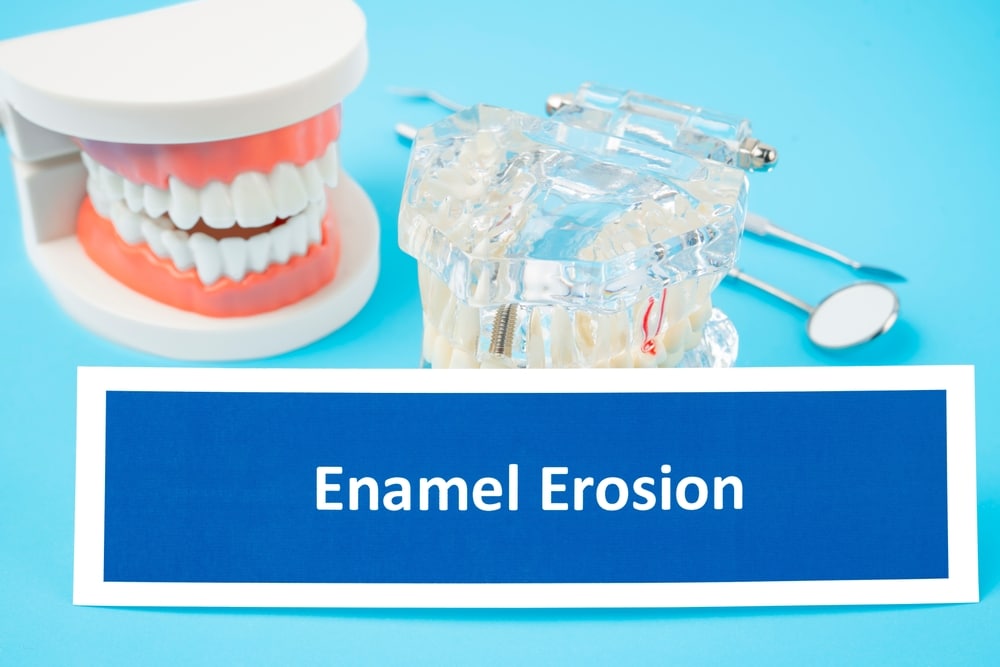
Dental erosion is the gradual wearing away of tooth enamel caused by acid contact. It’s not the same as a cavity. No bacteria are involved, and no sugar needs to sit on your tooth for hours. Acid alone does the damage.
The bigger concern is that enamel cannot regenerate once it’s gone. Your body simply doesn’t rebuild it.
This article covers what causes tooth erosion, the warning signs to watch for, practical ways to prevent it, and the treatment options available when erosion has already begun.
What Is Dental Erosion?
Enamel is the hardest material the human body produces, but it has one serious vulnerability: acid.
Dental erosion (sometimes called enamel erosion or acid erosion) occurs when acids chemically dissolve the mineral structure of enamel over time. The source of that acid can be your diet, your stomach, or even your environment.
It’s easy to confuse erosion with tooth decay, but they are separate conditions. Decay is caused by bacteria converting sugar into acid, which then attacks the tooth.
Erosion is direct acid contact, no bacteria required. It also differs from abrasion (physical wear from brushing) and attrition (wear from grinding), though all three can occur simultaneously.
The most important fact to understand: once enamel is lost to erosion, it’s gone for good. The body has no mechanism for regrowing it.
What Causes Tooth Erosion?
Dietary Acids
The usual suspects are citrus fruits, juices, sodas, sports drinks, energy drinks, wine, and vinegar-based foods. All of these have a low pH that softens enamel on contact. Most people assume that the quantity of acidic food or drink is what matters most, but the frequency is actually the bigger factor.
Sipping a soda slowly over two hours keeps your enamel in a prolonged state of acid exposure. Drinking the same soda in ten minutes gives saliva a chance to neutralize the acid between exposures.
Acidic snacks eaten between meals are also more damaging because there’s no meal context to buffer the acid through chewing and saliva flow.
Medical Conditions
Gastroesophageal reflux disease (GERD) is one of the more underappreciated causes of enamel erosion. Stomach acid travels up into the mouth, often without any obvious heartburn sensation. Many patients don’t realize their teeth are being exposed to highly concentrated acid repeatedly.
Frequent vomiting from morning sickness, eating disorders, or chronic nausea has the same effect. Dry mouth (xerostomia), whether caused by medications, dehydration, or systemic conditions, is another contributing factor. Saliva neutralizes acid naturally. Without enough of it, teeth have far less protection.
Lifestyle and Habits
- Brushing straight after eating or drinking something acidic. Acid temporarily softens enamel, and brushing during that window speeds up wear rather than preventing it.
- Scrubbing too hard or using a hard-bristled toothbrush, both of which wear down enamel faster than most people realize.
- Some mouthwashes have a low pH, which can contribute to erosion over time, particularly when used frequently.
- Swimmers who train in pools with improperly chlorinated water. This is uncommon but documented in competitive swimmers with high water exposure.

Signs of Dental Erosion to Watch For
Erosion tends to develop gradually, which is part of what makes it easy to miss. These are the signs that suggest it may already be underway:
| Sign | What it Looks or Feels Like |
| Sensitivity | Sharp reaction to hot, cold, or sweet foods – often one of the earliest indicators |
| Discoloration | Teeth appear more yellow as thinning enamel reveals the darker dentin layer beneath |
| Transparency | The biting edges of front teeth look slightly see-through or glassy |
| Rounded shape | Teeth lose their defined edges; chewing surfaces become flat or smooth |
| Cupping | Small dents or indentations appear on the biting surfaces of back teeth |
| Cracks and chips | Weakened enamel fractures more easily under normal bite pressure |
| Raised fillings | Existing fillings appear to sit above the tooth surface because the surrounding enamel has worn down |
Regular dental cleanings and checkups give your dentist the opportunity to catch erosion early, before it reaches a stage that requires more involved treatment.
How to Prevent Tooth Erosion
Prevention is genuinely achievable here. Most of the protective habits are small adjustments rather than major lifestyle overhauls.
Dietary habits:
- Cut down on how often you have acidic foods and drinks, not just the portion size. Frequency is what does the most damage over time.
- Use a straw with acidic drinks to keep the liquid from sitting against your teeth.
- Don’t swish or hold acidic drinks in your mouth before you swallow.
- End meals with water, milk, or a small piece of cheese. Calcium and phosphate help neutralize acid and provide some support for enamel.
- Chew sugar-free gum after eating. It stimulates saliva production, which is the mouth’s main natural defense against acid.
Brushing and oral care:
- Hold off on brushing for at least 30 minutes after eating or drinking anything acidic. Enamel softens temporarily after acid exposure, and brushing too soon makes things worse rather than better.
- Use a soft-bristled toothbrush and keep the pressure light.
- Use fluoride toothpaste. Fluoride supports remineralization and helps strengthen the remaining enamel.
- Ask your dentist about fluoride treatment as additional protection, especially if you’re at higher risk.
Managing medical factors:
- If you have GERD or chronic acid reflux, working with your doctor to control it directly protects your teeth. Stomach acid is highly erosive.
- Stay well hydrated. A dry mouth is a less protected mouth.
- Tell your dentist about any medications you take that may be causing dry mouth as a side effect. There may be alternatives or supplemental options that help.
How Dentists Treat Dental Erosion
The right treatment depends on how much enamel has been lost and which teeth are affected. Your dentist will assess the extent of damage and recommend an approach that addresses both the visible effects and the underlying cause.
Early-stage erosion:
- Professional fluoride treatment to strengthen what enamel is left and slow things down before they progress further.
- Regular checkups to monitor any changes over time.
Moderate erosion:
- Dental bonding, where a tooth-coloured composite resin is applied over worn surfaces to protect them and bring the appearance back. It tends to work especially well for front teeth that have gone transparent or started chipping.
Advanced erosion:
- Dental crowns to restore and protect teeth that have lost significant structure.
- Porcelain veneers for front teeth, where both aesthetics and protection are needed.
- In severe cases where erosion has reached the inner pulp, root canal treatment may be required before a crown can be placed.
Repairing damaged teeth is only part of the picture. Identifying and addressing the underlying cause (diet, reflux, brushing habits) is equally important. Without that step, erosion will continue regardless of what restorative work is done.
Schedule a Checkup at Southeastern Dental Center
Enamel loss is permanent, but the erosion process itself is highly preventable. Small, consistent changes to your habits can make a real difference in protecting what you have. If you’ve noticed sensitivity, yellowing, or any changes in how your teeth look or feel, it’s a good time to have them assessed.
The team at Southeastern Dental Center can take a close look at your enamel, spot any early signs of erosion, and walk you through the options that make sense for where things are at. Get in touch to book your visit and catch any damage before it worsens.
Frequently Asked Questions
What is the difference between dental erosion and tooth decay?
Tooth decay comes down to bacteria in the mouth breaking down sugars and producing acid as a byproduct. Erosion works differently. It happens through direct contact with acidic foods and drinks, stomach acid, or other external sources. Bacteria aren’t part of the equation with erosion at all. Both conditions damage enamel, but they have different origins and respond to different preventive strategies.
Can tooth enamel grow back after erosion?
No. Once enamel is lost, the body cannot regenerate it. Enamel cells are not present in mature teeth, so there’s no biological mechanism for regrowth. Research shows that fluoride can help remineralize weakened enamel in the very early stages, but once enamel has worn away, fluoride can’t bring it back. That’s what makes catching it early and staying on top of prevention so important.
What foods and drinks cause the most tooth erosion?
Soft drinks, including diet varieties, sports and energy drinks, citrus juices, wine, and anything vinegar-based tend to be the worst offenders due to their low pH. How often you’re exposed to them usually does more damage than how much you have in one go.
How do I know if I have dental erosion?
Common indicators include increased sensitivity to temperature or sweet foods, visible yellowing, teeth that look transparent at the edges, rounded or flattened chewing surfaces, and small dents on molar biting surfaces. A dentist can confirm erosion through a clinical exam and help you understand how far it has progressed.
Should I brush my teeth right after eating acidic food?
It’s best to wait at least 30 minutes. Acidic foods and drinks temporarily soften enamel, and brushing while it’s softened can remove more enamel than usual. Rinsing with water immediately after eating acidic food helps neutralize the acid in the meantime.
Can dental erosion be reversed?
The enamel itself cannot be reversed or regrown. Very early-stage demineralization may respond to fluoride treatment, but established erosion is irreversible. What can be done is to stop further progression through habit changes and dental intervention, then restoring damaged teeth with bonding, veneers, or crowns, depending on severity.
Related Posts
I’ve Avoided the Dentist for Years. Where Do I Start?
A 2025 study in the Journal of the American Dental Association found that almost 73% of adults feel some fear about visiting...
What is Conscious Sedation Dentistry?
Anxious about dental work? Learn how conscious sedation dentistry keeps you calm and comfortable throughout any procedure. Find out if it's right for you....
Curious About What Actually Happens During a Smile Makeover? We Can Help.
A lot of people hear the phrase “smile makeover” and immediately assume it means a long, expensive, overwhelming process. In reality, the...

What Are Your Favorite Sweet Drinks Really Doing to Your Teeth?
Sweet tea, soda, lemonade, iced coffee, maybe something cold from the gas station cooler on a hot day. That’s summer around the...

Traveling This Summer? Don’t Forget to Pack Your Best Smile!
As summer travel plans come together across the Chattahoochee Valley, people often focus on flights and packing, leaving dental care toward the...
What Causes Receding Gums — and Can They Grow Back?
Research published in the Journal of Periodontology found that nearly 88% of adults over 65 have at least one site of gum...